In the world of software development, there are projects—and then there are living, breathing ecosystems that evolve over years. Ours was the latter.
Spanning 4-5 years of continuous development, our application wasn’t just a collection of code—it was a robust platform relied on by clients who had grown fond of its stability and interface. Over time, it grew feature-rich, serving complex business needs with deep integrations, evolving user demands, and expanding data sets. But like any long-standing codebase, it began to show its age.
The Challenge: Compatibility Meets Reality
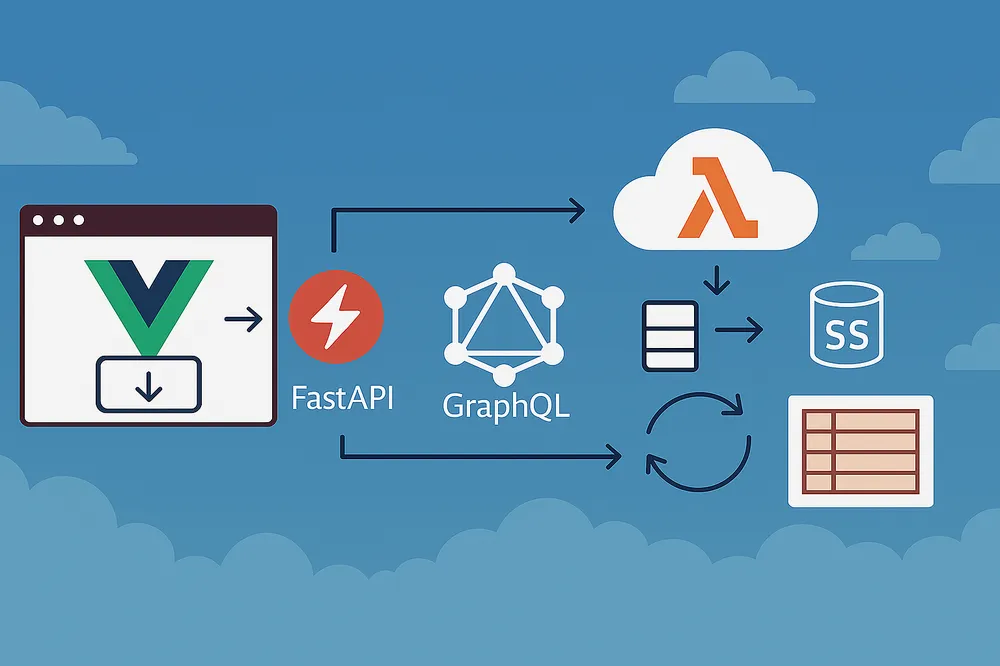
The turning point came when we needed to integrate new libraries—modern, powerful tools that would expand our capabilities, including AI-driven features like OpenAI integration. Unfortunately, the older versions of Python, Vue, Quasar, and other dependencies started to become bottlenecks. Compatibility issues surfaced, blocking progress.
We had to make a choice: patch around the issues endlessly—or migrate the entire stack to the latest ecosystem.
This wasn’t just an upgrade—it was a reinvention of the core while ensuring that everything worked exactly as before. And it had to be done within a tight timeline, all while ongoing integrations and deliverables continued to roll in.
The Blueprint: Planning Under Pressure
We knew success would only come from razor-sharp planning and disciplined execution. The first phase was analysis and triage.
1. Mapping the Battlefield
We began by identifying:
- The most critical and heavily used tabs and modules.
- Dependencies and custom utilities tightly coupled with older versions.
- Areas of the codebase where syntax and logic changes (especially in Flask SQLAlchemy queries) would be unavoidable.
This mapping helped us prioritize. We weren’t going to boil the ocean. Instead, we would strike surgically—prioritize the high-impact areas, get them stable, and move on.
2. Divide and Conquer
The team was divided based on expertise and ownership. Some focused on backend updates, particularly the new SQLAlchemy syntax. Others reworked the Vue+Quasar frontend to align with modern standards. Communication was tight. Stand-ups became our war rooms, and every blocker was treated as a frontline issue.
Strategic Execution: A Story of Grit and Grace
1. Parallel Universes: Old Meets New
To minimize client disruption, we set up new staging servers equipped with the latest NGINX versions, not just for performance—but for security, taking advantage of modern vulnerability patches.
This allowed us to test the migrated codebase in isolation while still pushing updates to the legacy system. For a short period, we lived in both worlds—supporting the old, perfecting the new.
2. Visual and Functional Parity
One of our non-negotiables was that the client experience should remain untouched. From the UI to every dropdown, modal, and report export—nothing could feel different.
This required finesse. We tested side-by-side, pixel-by-pixel, query-by-query. Minor regressions were caught early because of peer reviews, unit tests, and an exhaustive regression checklist we compiled from past bug reports and usage logs.
3. Documentation as a Weapon
In a project of this scale, reinventing the wheel is a time trap. We knew that if something had been fixed once, it shouldn't need re-discovery again.
So as part of our migration workflow, we meticulously documented every critical change—from frontend component migrations in Vue+Quasar to Flask SQLAlchemy query adaptations.
We created shared, easy-to-navigate records of:
- Syntax updates
- Dependency notes
- Common migration pitfalls and their solutions
This practice alone saved us countless hours during debugging and onboarding. Every team member could move confidently, armed with the tribal knowledge now captured in writing.
4. Team First, Timeline Always
Every delay had a cost. So we operated on a "two-track model"—one track for critical migration tasks, and another for supporting ongoing feature requests. It wasn’t easy, but team synergy and leadership alignment kept us afloat.
The leadership ensured that no one was overburdened. Breaks were encouraged. Knowledge-sharing was fluid. The migration wasn’t a sprint. It was a well-managed relay—everyone carried the baton forward.
The Triumph: Flip the Switch
After weeks of intense development, careful QA, and strategic rollout planning, we were ready.
✅ All major migrations done
✅ New server stable and tested
✅ Legacy repo gracefully retired
✅ Final DNS switch executed—domain now pointing to the new infrastructure
That moment was not just a technical success. It was symbolic. We had crossed over.
And what did the clients notice?
Nothing.
That was the beauty of it.
Reflections: What Made It Great
Looking back, this migration wasn't just a technical task—it was a testament to what strategic thinking, team trust, and smart prioritization can achieve under pressure.
We didn't just "upgrade" our tech. We redefined our baseline for agility, security, and scalability. We laid the foundation for next-gen capabilities and removed the blockers that had been holding us back.
If there's one lesson to share, it's this:
In tech, the hardest battles are often invisible to the user. But they are won through the visible strength of a united, focused team.
This was one of our proudest projects. Not because it was flashy. But because it was flawless—quietly, confidently, and completely transformative.
Now, with our foundations renewed, we’re building faster, integrating smarter, and innovating freely. The road ahead is clear—and we're already moving.